
MY OWN SONG
This project was implemented by the music teacher José Alberto Amador with his bilingual groups 2º ESO A and C. Across the different learning situations in Music this year, we’ve been travelling through the main periods of music history, exploring their key features and some of their most relevant composers, from Ancient Greece all the way to the music our students listen to today.
One of the most important developments in Western music, which began to be documented during the Late Middle Ages, was polyphony (from the Greek poly, “many”, and phonos, “sounds”): in other words, a compositional technique in which several independent melodic lines sound at the same time.
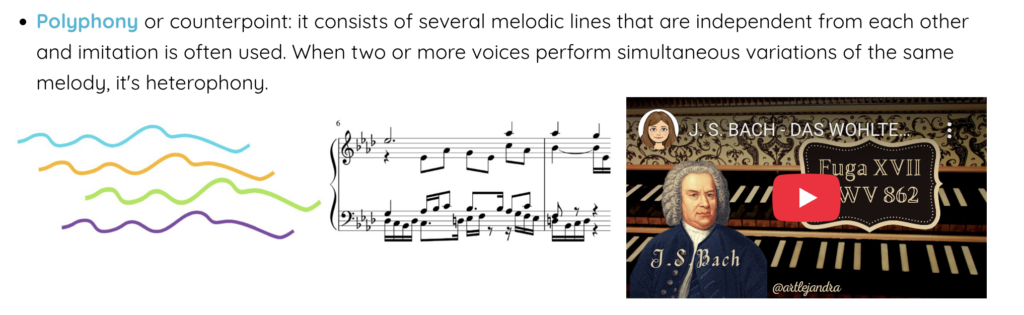
Image: “Polyphony” (source: Artlejandra’s Music Class).
From understanding texture to creating music
Within this historical context, it becomes especially interesting to explore the different types of musical texture; that is, the way melodic materials are combined.
And what better way to understand texture than through creation?
In the activity “My Own Song”, students composed their own piece by combining different textures and adding any creative elements they considered appropriate (drum patterns, instrument changes, contrasts, and more).
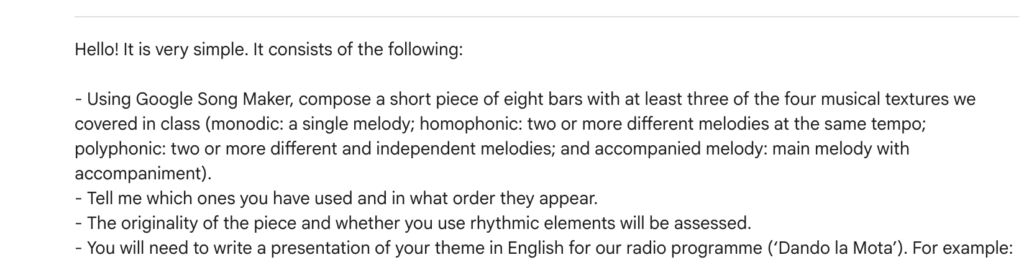
Image: “Instructions” (own material).
To encourage intentional, reflective work, students were also asked to record a short presentation of their song as if they were hosting a radio show. These narrations will become part of our school radio programme “Dando la Mota”, where we practise oral communication through students’ own creative projects.
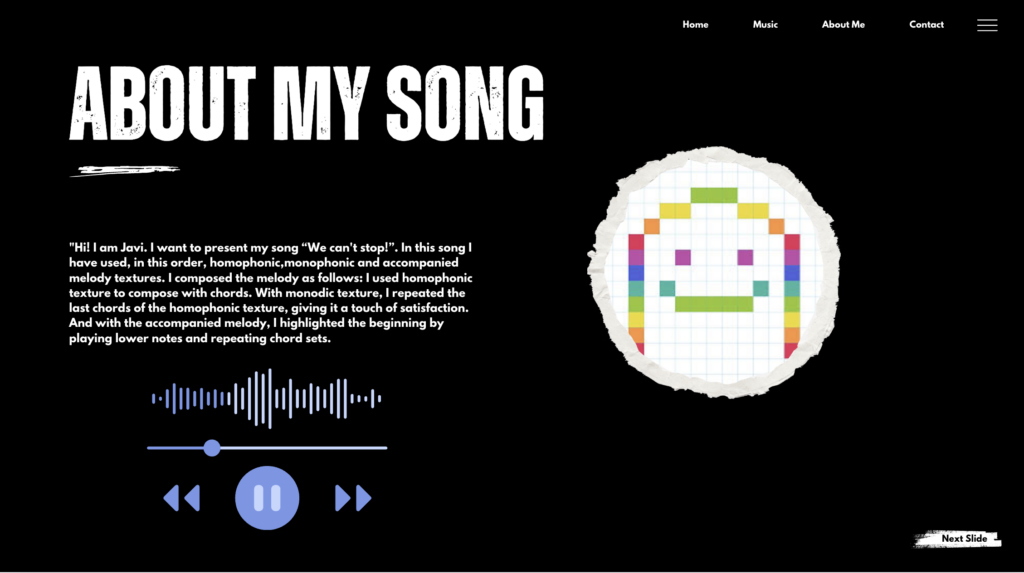
(Valle’s project)
What amazing tracks we’ve heard!
No responses yet